One-Word Replies Meaning: What “K,” “OK,” and “Sure” Can Say
A one-word reply such as “k,” “ok,” or “sure” has no single meaning in text. It may answer a simple question, confirm a plan, or close a topic. Read the wording with punctuation, the previous message, the sender’s usual style, and what happens next.
Try the free previewUpdated
What does “k” mean in a text?
“K” is a short form of “okay,” but its tone depends on the person and the exchange. It can acknowledge information, confirm a choice, or sound abrupt to someone who expected a fuller response. A period, an emoji, or capitalization may change the reader’s impression, but none creates a universal code.
The dry text meaning guide explains why brief messages describe how a text comes across rather than what the sender secretly means. To interpret “k,” begin with the question it answers and the relationship’s normal texting style.

What does “ok” mean in text?
“Ok” or “okay” often means the sender has understood or accepted something. If the question is “Should I bring the book?” then “ok” may be enough to confirm. If the message was “I’m having a rough day,” the same response may feel less supportive because the topic called for acknowledgement or care.
The difference is not a dictionary definition; it is the work the reply performs in that moment. Ask whether it answers the practical question, acknowledges the personal detail, or leaves an important concern unresolved. A short answer can be appropriate in one case and unsatisfying in another without proving that the sender intended to be rude.
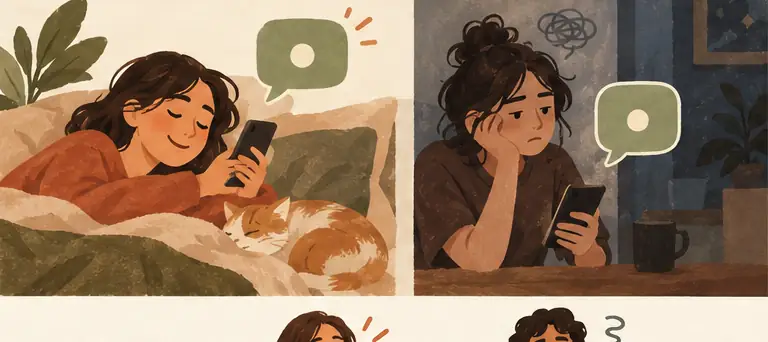
What does “sure” mean in a text?
“Sure” can express agreement, willingness, uncertainty, or a neutral acknowledgement. It may sound enthusiastic when followed by a plan, or reluctant when it appears after repeated pressure. A reader should not assume the most positive or negative version without checking what came before and what happens after.
Fictional example: “Want to meet at four?” — “Sure, I’ll meet you outside the station.” The second part makes the plan concrete. Fictional example: “Would you like to join?” — “Sure.” If no further detail appears, the message still does not establish how strongly the person feels. The dry text examples compare short replies with their context.
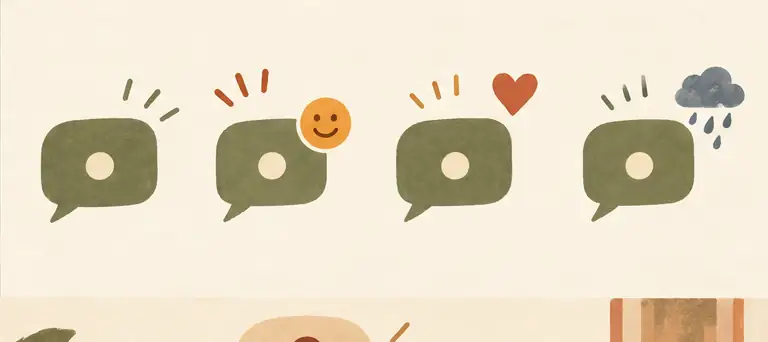
Compare the question, the reply, and the next turn
A message is part of a sequence. Read the preceding prompt, the one-word reply, and the next turn. If the answer completes a simple decision, it may be sufficient. If it avoids a question about timing, consent, or a boundary, the issue is that the needed information is missing—not that a single word has a hidden translation.
Notice the person’s baseline, too. Some people use short replies with everyone; others usually send detailed messages. A change can be worth asking about, but a single “k” is not a reliable way to infer anger or loss of interest. If you need a clear answer, ask for one directly.
| Reply | A practical reading to check | What the word cannot prove |
|---|---|---|
| “K” | Acknowledgement or a very concise confirmation. | Anger, sarcasm, or rejection. |
| “Ok” | Understanding or acceptance when the question is clear. | That the person agrees with every detail. |
| “Sure” | Willingness or agreement, especially if a plan follows. | Enthusiasm or reluctance without more context. |
| “Yeah” | A yes or acknowledgement, depending on the prompt. | Whether the sender wants a longer conversation. |
Punctuation and emoji can change the impression
“Okay.” may read more formal or final to some people than “okay!” or “ok 🙂”. That reaction is personal and culturally shaped; punctuation is not a dependable emotional decoder. An emoji can soften a reply for one reader and feel out of place to another.
Try not to build a whole explanation from punctuation alone. If a practical decision matters, clarify the plan. If a relationship concern matters, describe the broader change. The guide on how to stop dry texting has examples of adding a detail when a short answer could be misunderstood.
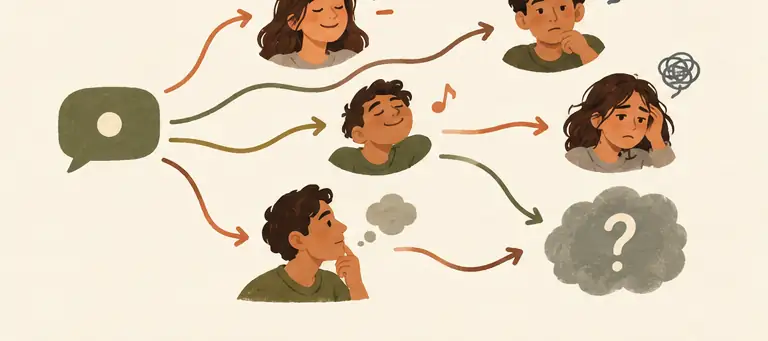
When a one-word reply becomes a repeated pattern
A pattern is about repetition and impact, not about counting every short answer. If important questions repeatedly receive incomplete replies, you can say what information is missing. If you are always reopening the conversation and the other person rarely follows through, you can discuss reciprocity without claiming to know why it happens.
A clear check-in may sound like: “I’m not sure if you saw my question about Saturday. Do you want to make a plan?” Then wait for the answer. The dry texter or not interested guide discusses initiative and follow-through as separate context from one-word replies.
Fictional examples: a short reply is not a verdict
Fictional example: “Can you pick up bread?” — “Yep.” The reply is short and the task is understood. Fictional example: “I felt ignored when the plan changed.” — “Ok.” That may feel insufficient because the sender has not acknowledged the concern; asking what they understood can help clarify the discussion.
These examples are invented and illustrate the role of context, not an exact translation for every relationship. If a conversation is tense, consider tone, the events that led to the message, and whether the people can talk safely and respectfully. A text export can contain words but not the whole history.
Choose a response that asks for the information you need
If you need to know whether someone agreed, ask a practical follow-up: “Just confirming, does four work?” If you need more engagement, describe that need: “I’d like to hear what you think when you have time.” If the exchange is complete, you can let it end rather than creating a second question to test the reply.
For more examples, see what to text a dry texter and dry text responses. If you choose to analyze a full export, read how DryText works and privacy details first.

Frequently asked questions
What does “k” mean in a text?
It is a short form of “okay.” It may acknowledge or confirm something, but its tone depends on the conversation and the sender’s usual style.
What does “ok” mean in text from a girl or a guy?
The word has no gender-specific meaning. It can signal understanding or agreement, and the surrounding question and behavior matter more than the sender’s gender.
Does “sure” mean someone is annoyed?
Not necessarily. “Sure” can confirm a plan or simply acknowledge a request. Read what came before and whether the person follows through.
Is a one-word reply a dry text?
It can feel dry when it gives little to continue with, but a one-word answer can also be complete and appropriate for a simple question.
Should I ask what “ok” means?
If an important decision or concern is unresolved, ask directly for the information you need. Avoid demanding that the sender decode punctuation or prove an emotion.
Can an AI tell what a one-word reply means?
An AI can summarize text patterns, but it cannot know private intent. Any interpretation should be checked against the surrounding messages and real-world context.