How to Stop Dry Texting Without Forcing It
To stop dry texting, add a useful detail or a genuine follow-up when you want the conversation to continue. You do not need to write long messages or perform constant enthusiasm. Answer clearly, acknowledge what the other person shared, and keep your natural voice.
Try the free previewUpdated
Start with the message you want to send
Being less of a dry texter does not mean adding filler, emojis, or extra questions to every message. It means making your meaning easier to understand when the other person needs context. If the answer is yes, say yes. If you want the exchange to continue, add one detail or a question that reflects real curiosity.
The dry text test can help you notice patterns in your own writing, but its score is only a prompt. The dry text meaning guide also explains why brief messages can be completely appropriate in the right context.

Use the answer-plus-detail pattern
A useful rewrite often keeps your original answer and adds one concrete piece of information. Fictional before: “Good.” Fictional after: “Good—the meeting was shorter than I expected, so I’m heading home early.” The added detail is specific, but it does not demand a reply or pretend that the day was more exciting than it was.
Another fictional example: “Maybe.” can become “Maybe Saturday; I need to check my work shift tonight. I’ll let you know tomorrow.” This is still concise, but it explains what is uncertain and when you expect to know. Only add a follow-up time if you intend to return to the conversation.
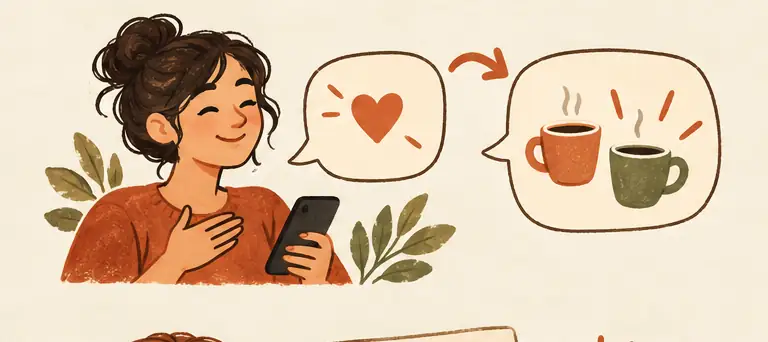
Acknowledge before switching topics
When someone shares news, a quick acknowledgement signals that you read it before moving on. It can be simple: “That sounds like a lot to manage—did the schedule work out?” or “I’m glad that went well. What part did you enjoy?” The point is not to use a script. It is to answer the detail they offered rather than jumping to a new subject without noticing it.
If you do not have energy for a longer exchange, say so plainly: “I want to hear about this, but I’m in the middle of something. Can I call after dinner?” That is warmer and more reliable than sending several short replies while distracted. The responses guide can help when you are on the receiving end of a brief message.

Rewrite closed messages without adding pressure
A rewrite should clarify, not coax. Fictional before: “Ok.” Fictional after, if the plan is settled: “Okay, six works. See you there.” If you need a decision: “I can do either Friday or Sunday; which is better for you?” If you disagree: “I see it differently, but I want to understand what you meant.” Each version says more because the situation requires it.
Do not tack on a question just to keep the chat alive. A message such as “Nice, what else?” can feel like an interview when it has no connection to the topic. The what to text a dry texter guide covers how to keep an exchange going without carrying all of it yourself.
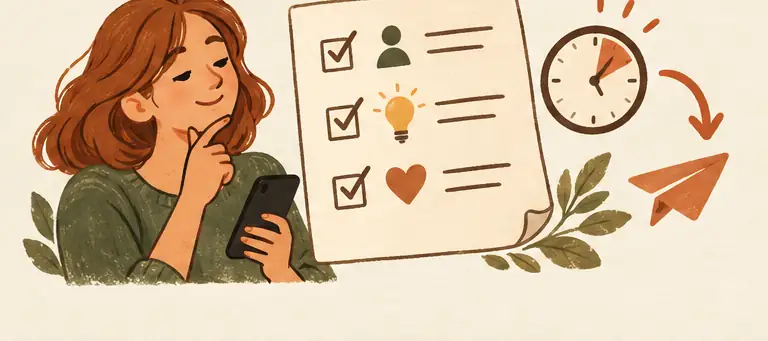
Choose questions that have a real reason
A specific question is easier to answer than a vague request to “say more.” Ask about a detail that matters: “Did the new route save time?” or “Would you like feedback, or would you rather just tell me what happened?” A question can also show that you remember something from an earlier conversation. That is more meaningful than asking a long series of generic questions.
Questions are optional. If someone shared a sensitive experience, a statement of support may be more considerate than immediately asking for details. A clear message can leave room: “I’m here if you want to talk about it.” Respect their choice if they do not continue.
Match the situation, not a formula
Texting style changes with topic, energy, language, culture, and time pressure. A one-line confirmation may be perfect for logistics. A difficult apology may require more words. If you usually write briefly, you do not need to imitate a different personality; focus on avoiding ambiguity when the other person needs information or reassurance.
Take a small pause before sending. Ask whether you answered the question, included the detail needed to understand your meaning, and left an easy next step if one is useful. Do not use this checklist to monitor every message. Communication should feel more understandable, not more exhausting.
Be direct when your energy or interest is low
Sometimes a short reply reflects low energy, distraction, or a wish to end a conversation. You can be honest without being unkind: “I’m not up for a long chat tonight, but I saw your message,” or “Thanks for asking. I don’t think I want to take this further.” This is clearer than leaving someone to infer a boundary from repeated “yeah” messages.
You are not responsible for keeping every conversation alive. A natural ending is allowed. If you need a script for a specific unclear exchange, start with the dry text examples and adapt the wording so it stays true to you.
Practice with fictional rewrites
Fictional example: “How was your trip?” — “Good.” A fuller answer might be: “Good—the train was delayed, but the museum was worth it. Have you been there?” Fictional example: “Want to talk?” — “Later.” A clearer version might be: “I can’t talk now; I’m free after eight if that works.” Each rewrite provides information the other person can use.
Practice on messages you actually want to improve, not a fictional score target. If you want to compare recurring patterns in a full chat, review how the DryText report works and read the safety guide before deciding to upload a transcript.

Frequently asked questions
How do I stop being a dry texter?
When you want to continue a conversation, add one useful detail, acknowledge what the other person said, or ask a relevant question. Keep concise replies when they fully answer the situation.
Do I need to use emojis to sound less dry?
No. Emojis are optional and can be misread. Clear details, direct answers, and sincere acknowledgement are more important than adding a symbol to every message.
How can I make a text more interesting?
Share one specific detail about your answer or ask about something the other person actually mentioned. Avoid forcing a long exchange when neither person has more to add.
Is it bad to send short texts?
No. A short message can be clear, considerate, and complete. It may feel closed only when the context calls for more information or when a repeated pattern leaves one person carrying the conversation.
Can I sound warm while setting a boundary?
Yes. State what you can do and, if appropriate, when you can reconnect. A direct boundary is often kinder than giving a vague reply that creates an expectation you cannot meet.
Should I change my texting style to keep someone interested?
You can make your meaning clearer, but you do not need to perform a different personality. Notice whether communication feels reciprocal and whether you can be direct with each other.