Is Dry Texting a Red Flag? A Context-First Guide
Dry texting by itself is not a red flag: brief messages can reflect habit, timing, or a simple answer. What matters is the broader behavior—whether communication is respectful, boundaries are honored, and plans or concerns can be discussed without pressure or fear.
Try the free previewUpdated
Dry texting alone is not a red flag
A short “ok” or delayed reply does not, on its own, show disrespect, manipulation, or danger. Some people communicate briefly, and some moments call for a complete one-word answer. The phrase “dry texting” describes how a message feels to a reader; it does not explain the sender or establish a pattern.
This distinction matters because labels can escalate anxiety without adding evidence. The dry text meaning guide explains the term carefully, while the relationship guide looks at communication patterns in a wider context.
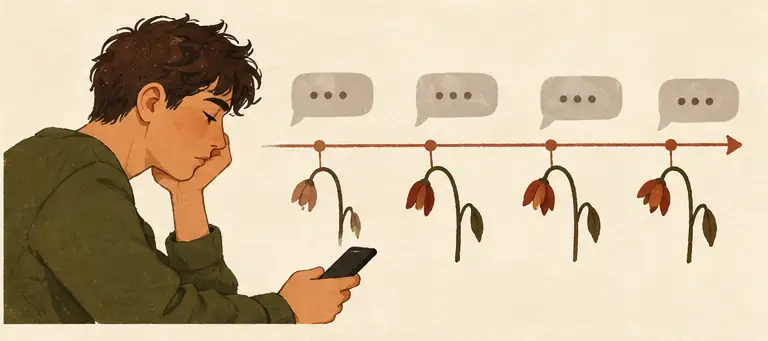
Look at repeated behavior and its impact
A pattern may be worth discussing when your questions are repeatedly ignored, plans are continually left uncertain, or one person is expected to carry every conversation. Those observations describe an interaction. They still do not tell you whether the other person is busy, avoidant, confused, or intentionally withholding information.
Focus on what you can verify and how it affects you. Does the other person respond when you raise a concern? Do they respect a clear no? Do apologies lead to different behavior? If you are uncertain whether a short texting style is part of a broader drop in participation, compare it with the dry texter or not interested guide, not with a universal response-time rule.

Separate communication strain from safety concerns
A difficult texting pattern can feel frustrating without being unsafe. Safety concerns are about behavior such as threats, coercion, unwanted monitoring, pressure to share private information, or retaliation when you set a boundary. Those actions matter regardless of whether the person’s messages are long, short, affectionate, or inconsistent.
You do not have to diagnose a person or prove a hidden motive before seeking help. If you feel in immediate danger, use local emergency support and contact someone you trust. For general data and product-use boundaries, read the DryText safety guide; it is about the app, not a substitute for personal safety planning.
| Observation | What you can say | What not to conclude from it alone |
|---|---|---|
| One short reply | “That message was brief.” | That someone is unsafe or does not care. |
| Repeated unanswered questions | “I have not received a clear answer to this.” | Why the person is not answering. |
| A stated boundary is ignored | “I asked for this behavior to stop, and it continued.” | A clinical diagnosis. The behavior itself can still be addressed. |
| Threats, coercion, or retaliation | “I feel unsafe and need support.” | That you must manage it alone or prove intent first. |
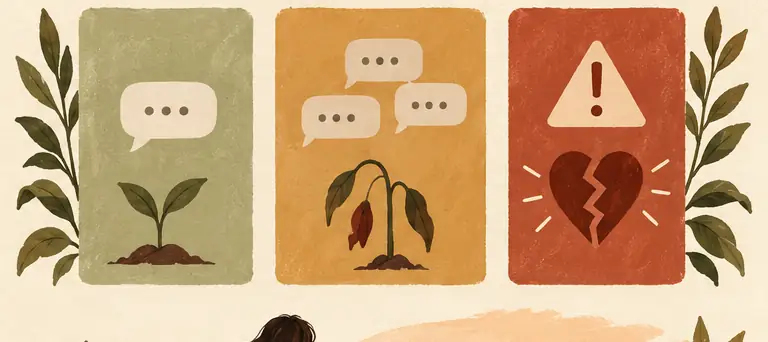
Ask about a communication shift without accusing
If the concern is mainly that messages have changed, try a direct check-in: “Our conversations have felt shorter and plans have been less clear lately. Is something affecting your availability?” This says what you noticed and invites context. You can also say what would help: “I’m okay with concise texts, but I need a clear yes or no about plans.”
Choose a calm moment when you can listen to the answer. If the conversation repeatedly becomes a debate about whether your observation is allowed, step back and decide what communication you need. The guide on what to text a dry texter includes low-pressure wording for uncertain exchanges.

Fictional examples: style, strain, and boundaries
Fictional style example: A person replies “Yep” to a simple time check, then arrives as planned. The reply is short; the behavior is clear. Fictional strain example: One person repeatedly asks whether a plan is still happening and receives no answer until the last moment. That can be frustrating even if the cause is unknown.
Fictional boundary example: Someone says “Please stop asking for my live location,” and the other person keeps demanding it or becomes threatening. The important issue is the ignored boundary and the pressure—not whether a message is dry. A transcript may document words, but it cannot replace trusted support or your judgment about safety.
Set boundaries around the behavior you can name
A boundary is a statement about your own limits and choices. “I can make plans when we agree on a time by Friday; otherwise I’ll plan something else.” “I will pause this conversation if we start insulting each other.” These statements are concrete and do not require you to prove why someone else behaved a certain way.
Keep boundaries proportional and safe. If stating a boundary could increase danger, consider seeking private advice from a trusted person or a local support service first. Do not use an AI analysis or this guide as a substitute for that help.
What a chat export can and cannot show
A chat export can show the text that was included, such as repeated short replies or a written boundary. It may omit voice calls, deleted messages, surrounding events, and tone. An AI report can organize excerpts, but it cannot determine whether a relationship is healthy or decide how much risk you should accept.
If you choose to review an export, start with how DryText works and privacy information. Upload only conversations you are entitled to use. For a question that concerns safety, prioritize real-world support over an automated interpretation.
Make a decision based on your experience
You may decide that the communication does not work for you even when you cannot explain the other person’s motive. You can ask for a change, observe whether it happens, and choose whether to continue the interaction. This is different from declaring that a short reply proves a hidden intention.
If the exchange feels merely unclear, a calm question may help. If it includes coercion, threats, or fear, focus on support and safety first. A label like “dry texter” is less useful than a clear description of what happened and what you need next.

Frequently asked questions
Is dry texting a red flag?
Not by itself. Short messages can be a communication style or a complete answer. Consider repeated behavior, whether boundaries are respected, and how the interaction affects you.
Can dry texting be manipulative?
Message length alone cannot establish manipulation. Look at specific behaviors such as threats, coercion, deliberate pressure, or retaliation, and seek trusted support if you feel unsafe.
Should I end a relationship because of dry texts?
That decision is yours and should consider the whole relationship, your needs, and observable behavior. One short reply is not enough evidence to decide what someone intends.
How do I bring up dry texting without accusing someone?
Name the change you have noticed, explain what would help, and ask an open question. For example, say that plans have felt less clear and ask whether their availability has changed.
Can an AI tell if a relationship is unhealthy?
No. A text report can organize excerpts and communication patterns, but it cannot assess all context or replace professional or trusted support.
What should I do if I feel unsafe?
Prioritize immediate safety and contact local emergency help or a trusted person. Do not wait for a text analysis or try to prove another person’s intent first.